DATE
05/06/2025
Optimized process from start to finish
Photo print production at Cewe:
ISAG ensures efficient cutting/packaging processes
Photo production
Portfolio
Services
Photo print production
Category
Cutting & packaging processes
Client
Cewe

Staying focused during the final stages of production
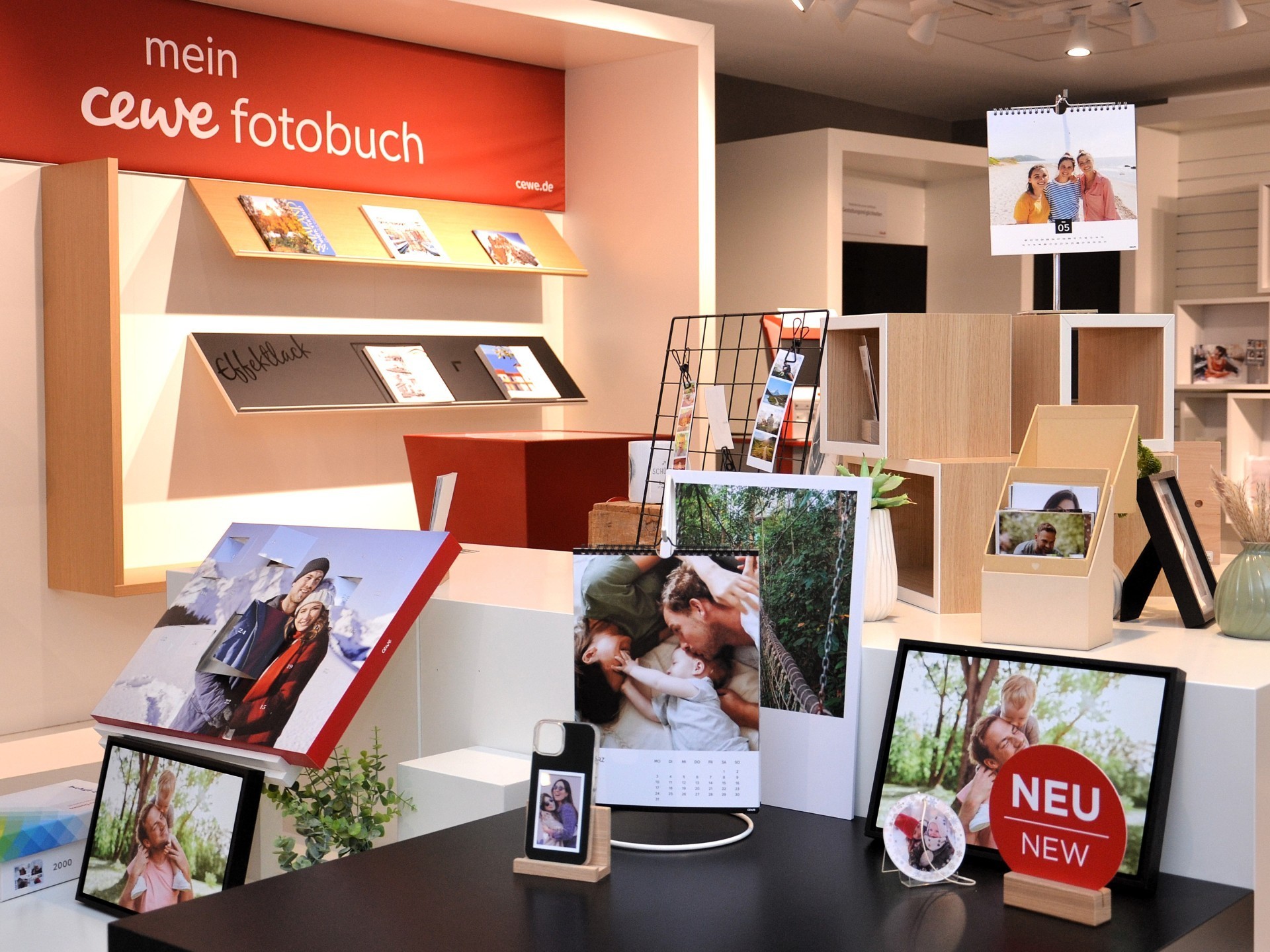
Even in the age of digital photos, the desire for “photo prints” has by no means disappeared. No one knows this better than Cewe. Cewe digital photo printing machines are present in 20,000 partner companies in 26 European countries. However, the majority of photo orders will still be placed online in 2025 at the company's headquarters in Oldenburg. Here, the machines from Imaging Solutions AG ensure that the printed photos are transferred from the roll to the shipping envelopes in the last, decisive meters.
Optimize the process from start to finish
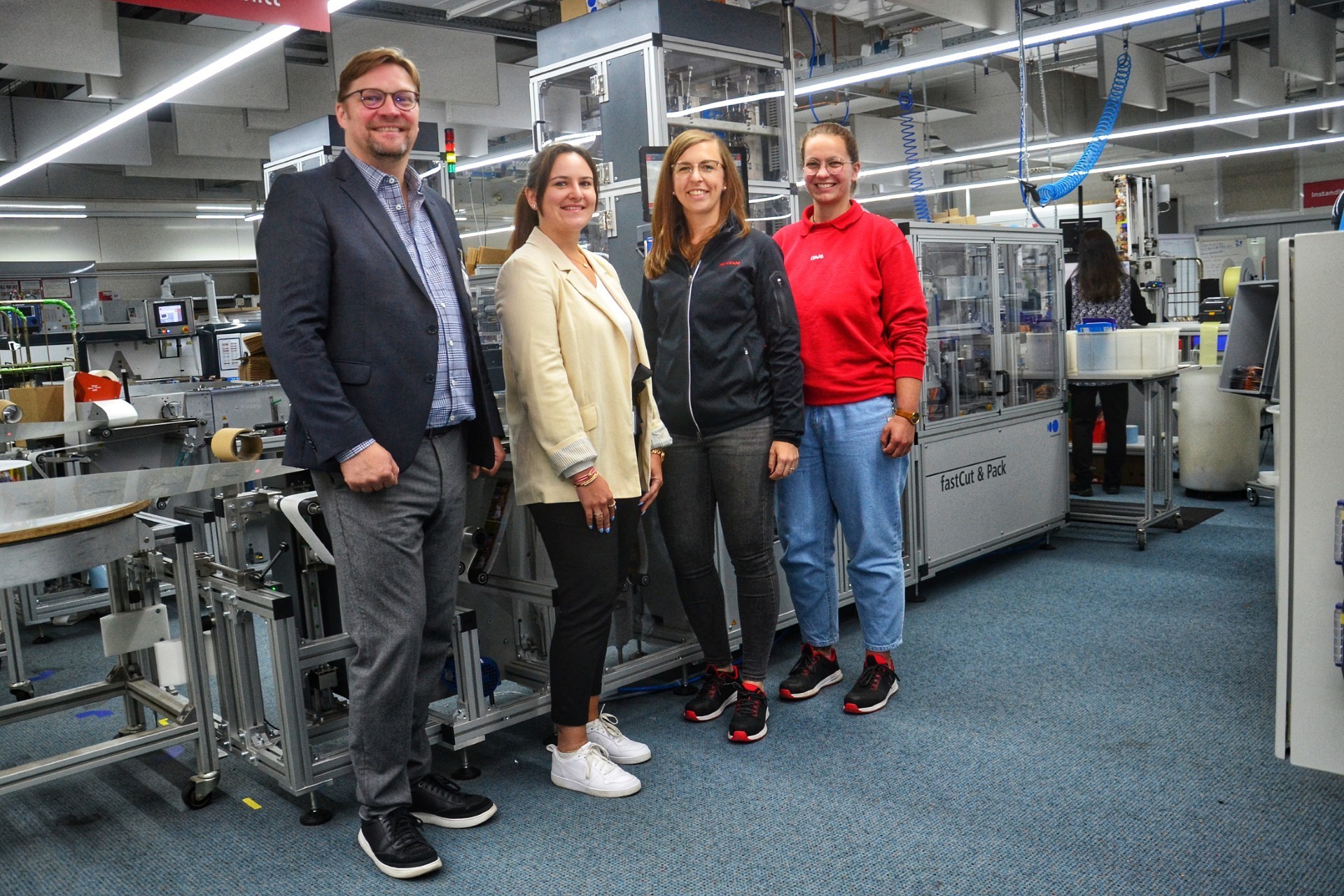
Anna Nordhausen is production manager in the photofinishing division, which, as she explains, "includes everything that happens on paper." So her area of responsibility also includes photo books on photo paper and calendars, areas in which Cewe, with its first photo books in 2003, not only redefined the market, but above all the way people experience and view their photos. During our visit to the Oldenburg site, which with its approximately 1,200 employees is the heart of the company, founded in 1961, these photo products tend to take a back seat. This is because Anna Nordhausen and her colleague, Imke Banemann, project manager for operational excellence, had recently been working on a project to make the process of transferring photo prints from the exposed roll to the shipping envelope as efficient as possible. Cewe commissioned Swiss mechanical engineering specialist ISAG to develop this solution.
Imaging Solutions AG specializes in modular, automated systems for the finishing of photo products and develops customized solutions ranging from cutting and sorting to packaging. Especially for high volumes and complex orders, the machines ensure maximum efficiency and precision. Gregor Kohle (CMO, Head of Sales and Marketing) does not know offhand how many Imaging Solutions AG machine systems are in use at Cewe.
However, due to the large number of systems, there is essentially no location or subsidiary of the company, which employs 4,000 people across Europe, where an ISAG machine is not in use. “The really great thing about working with Cewe is that we have time,” says Gregor Kohle, “and we can take the time to discuss the details. We can also take the time to look at the big picture and see how we can improve the overall system.”When the Christmas season, which is the most important time of the year for our industry, the machines are running in three shifts," explains Anna Nordhausen, “then we can't afford to stand still!” That's why, Imke Banemann agrees, it's important to eliminate errors in advance and, if necessary, invest more time in development than having to call the technician during the production phase.
Seamlessly integrated into the workflow
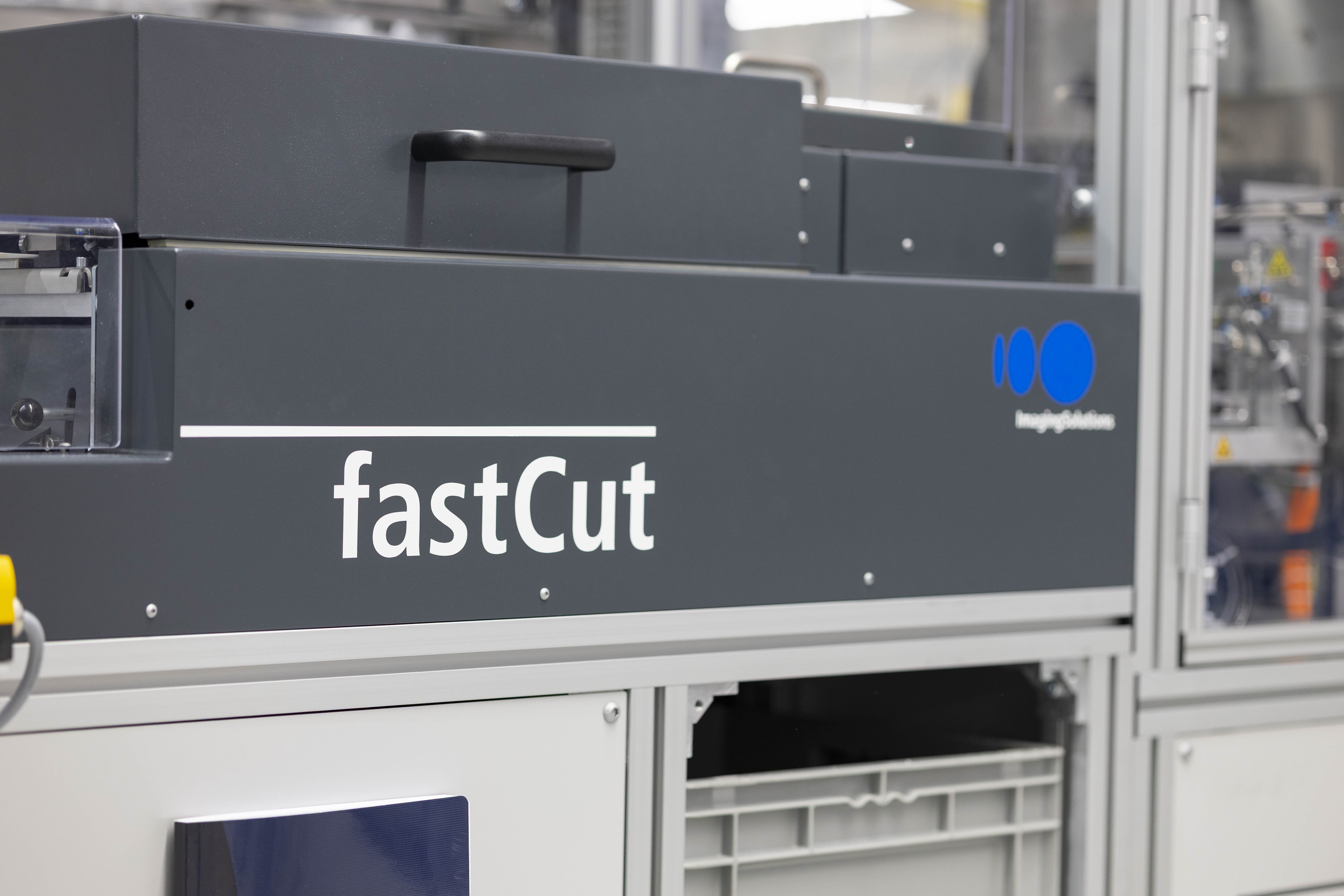
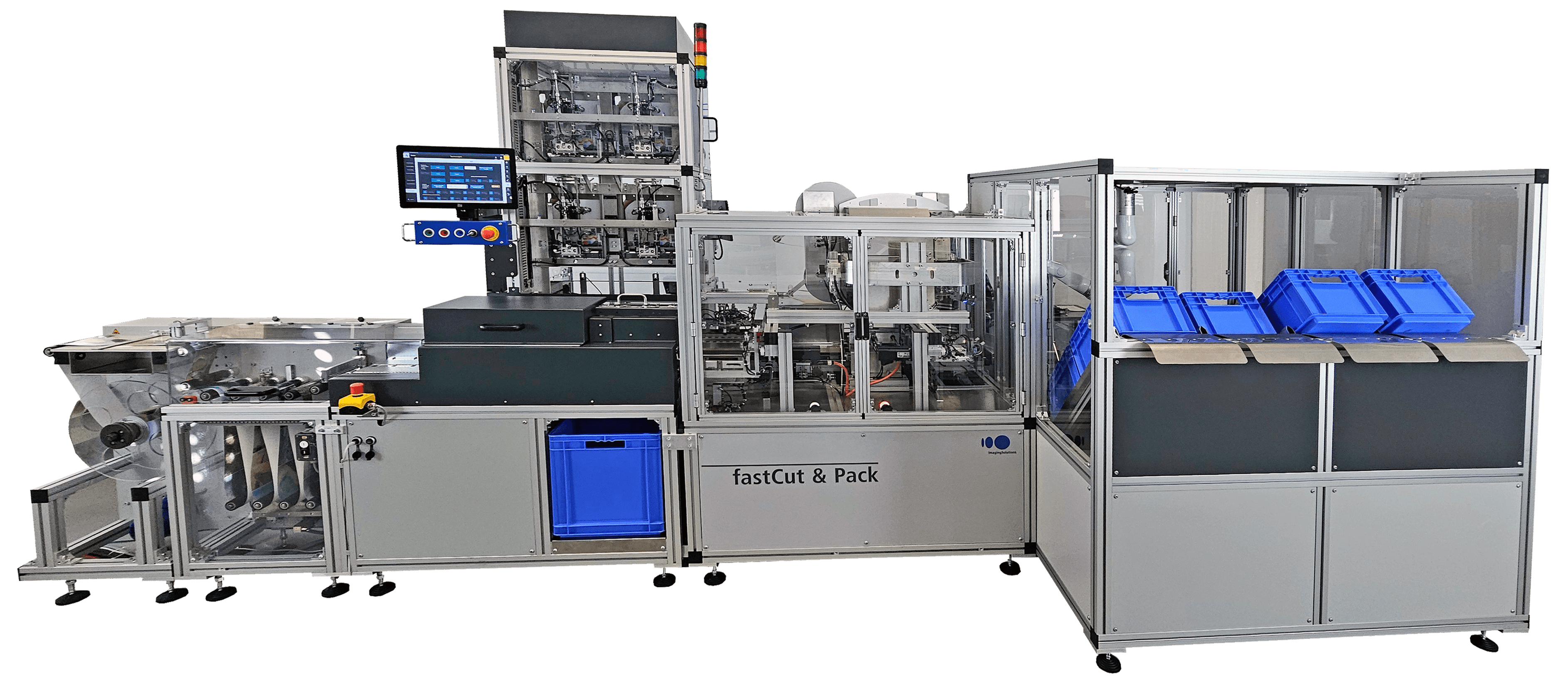
With the stand-alone FastCut, ISAG has developed a proven cutting system for photo paper rolls, while the FastCut & Pack, a modular extension of the stand-alone version, automatically packs the finished photos into photo bags after cutting. For example, air is blown between the images as soon as they are placed on the storage table to ensure that the entire stack is clean and precisely aligned for insertion into the photo bags. The FastCut & Pack is available as a stand-alone version or as a modular extension of the stand-alone version. For example, air is blown between the images as soon as they are placed on the storage table in order to align the entire stack neatly and precisely for insertion into the open photo pocket. These are the small details that have to work perfectly to ensure the big picture, the production flow. Such systems are Such systems are §not new, but Cewe's requirements, as Gregor Kohle explains, placed high demands on the speed of the process. The result today is a machine that can pack up to 500 envelopes with 50 pictures each or 350 envelopes with 80 photos per hour. In an eight-hour shift, with 50 pictures per envelope, that would be 4'000 envelopes with a maximum of 200'000 photos! The machine takes care of all process steps from unrolling from the photo paper roll to smoothing and cutting the photos to the desired format. The images are then automatically stacked, packed into photo bags, and sealed. An integrated printer applies ID labels to the bags, enabling precise job assignment.
This only works because a workflow in the background handles a vast amount of data records that log each photo order. The logistics are enormous, which means that Imaging Solutions' system had to be seamlessly integrated into this workflow and the software behind it. Op-tionally, the finished photo pouches could also be sorted and stacked automatically. Optionally, the finished image pockets could also be sorted and stacked automatically. “The maximum cutting speed,” says Imke Banemann, "is up to ten images per second, which, in conjunction with automated packaging and labeling, ensures a continuous production flow. Technically, the FastCut & Pack system with roll widths from 89 to 127 millimeters and image lengths from 89 to 225 millimeters, with paper thicknesses between 0.20 and 0.30 millimeters. The machine processes both classic photo paper and digital printing paper. The modular system can be equipped with either a single or a quadruple unwinder.
The quadruple version has an automatic splicing station that allows roll changes without interrupting the production process. The modular design offers the option of configuring individual components according to production requirements.
Reduce required manpower
Two of these systems have been installed in Oldenburg, the first in 2024 and the second a few weeks ago in April. One goal for the future in Oldenburg is to optimize the operation of both machines so that they can be operated by just one person. This is not yet possible at present. Imke Banemann praises the expected reliability. And if an error does occur, for example due to a bag slipping, the system stops immediately, so that incorrect sorting, for example, is ruled out. The system is also designed to be.